
Your grandchildren won't fill their tanks -- or own cars [Report]

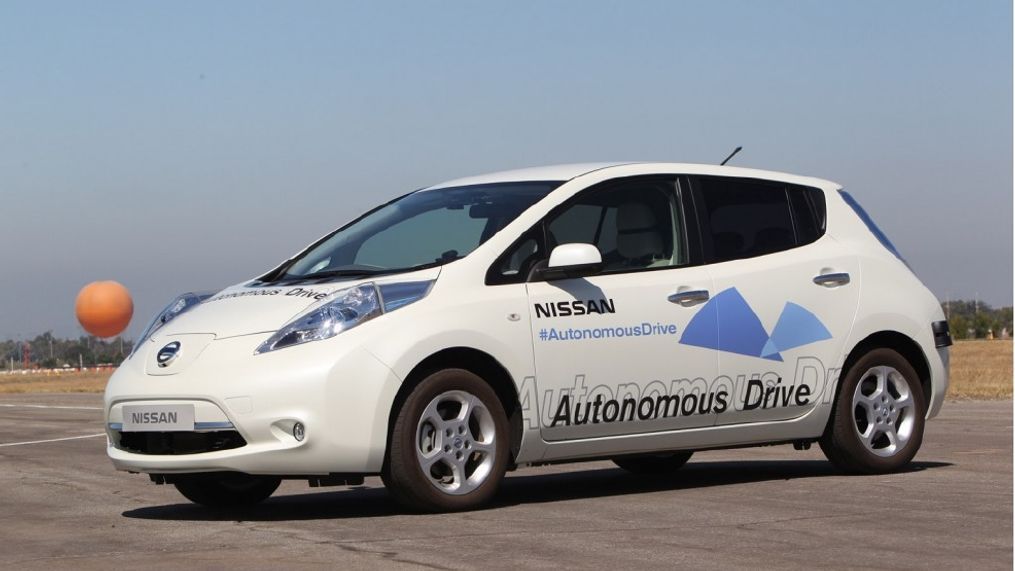


The internal-combustion car was the dominant form of personal transportation in the U.S. for most of the 20th century, and that is still the case today.
But electric cars are gaining momentum, and they could lead to even more drastic changes in the car industry than just the abandonment of fossil fuels.
Imagine if your grandchildren not only didn't fill gas tanks but also didn't own cars at all.
DON'T MISS: How To Cut Vehicle Emissions 90 Percent: Get Rid Of Human Drivers (Jul 2015)
Electric powertrains will enable other technologies that could spell the end for individually owned cars, argues Navigant Research senior research director John Gartner in a recent article for EV World.
Many analysts have argued that the combination of electric power, autonomous driving and car-sharing and ride-sharing services will profoundly change how people use cars.
Gartner argues that electric powertrains will be "the lever for this change" because they complement those new technologies and services.
The array of sensors and processors required for self-driving cars draw a considerable amount of electricity, and a fully electric powertrain can more easily provide this, he says.
The same would theoretically be true of the numerous connectivity features that would give people relieved of the duty of driving something to doand potentially make sharing services more efficient.
Increased use of car-sharing and ride-sharing services could shift more volume to the roads from public transit, Gartner notes.
ALSO SEE: BMW ReachNow car-sharing service offers i3 electric cars in Seattle
This could actually increase traffic congestion and vehicle emissions in urban areas.
Fleets of electric cars would cut down on emissions, while connectivity features could be used to network them together and coordinate their movements.
Cars used in sharing services will still have higher annual vehicle-miles traveled (VMT) than today's individually-owned cars, which will likely shorten their lifespans.
However, that could have the positive effect of an increased supply of used electric-car battery packs, which could be re-purposed for energy storage, says Gartner.
Stationary battery packs can be used to store energy from solar panels for later use, or to balance electricity grids.
MORE: Chevy Bolt EV electric car to be GM-Lyft self-driving car testbed
BMW plans to offer a home energy-storage system that uses re-purposed "second-life" battery packs, while General Motors and Nissan have experimented with the concept in commercial applications.
Higher VMT could also require more frequent replacement of cars, helping to soften the blow of falling new-car sales brought on by sharing services, says Gartner.
Yet carmakers plan to do more than just supply vehicles to sharing services.
BMW and Daimler already operate their own car-sharing services, while GM is investing in ride-sharing service Lyft and has its own "mobility" brand called Maven.
Ford plans to transform itself from a car company into a "mobility company" by looking at ride-sharing and other potential sources of revenue beyond car sales.
_______________________________________________
